Water Features That Hold Through Dry Seasons
Pond Construction in Newcastle for Properties Needing Livestock Water or Recreation
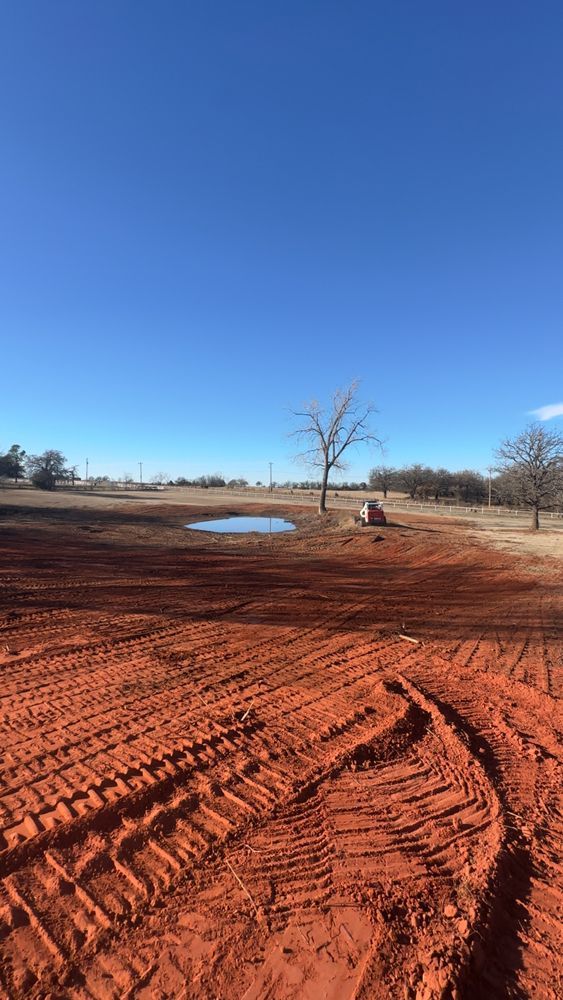
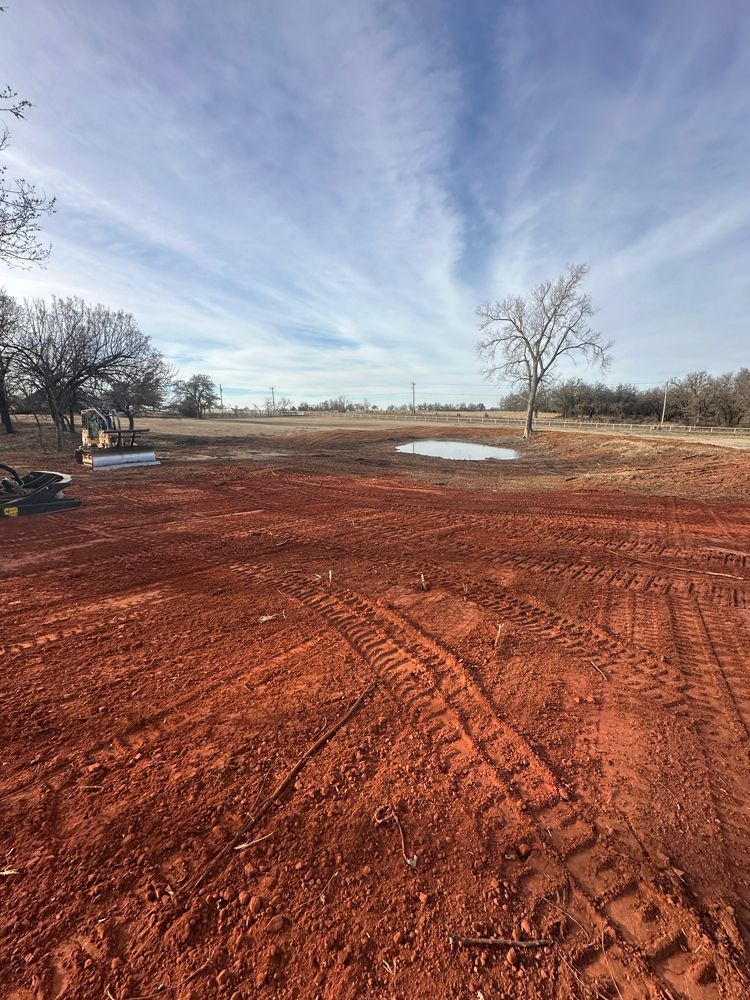
A properly built pond adds usable water storage to rural properties, supports livestock operations, and creates recreational opportunities, but only if the excavation, shaping, and water control features are designed to hold water through Oklahoma's variable rainfall and seasonal droughts. Okie Elite Land Services builds ponds across Newcastle, Tuttle, and surrounding rural areas, handling excavation depth, spillway placement, and embankment compaction that determine whether a pond fills reliably and maintains water levels year-round. If your property lacks consistent water access for livestock, needs irrigation storage, or would benefit from a stocked fishing pond, construction involves more than digging a hole—it requires evaluating soil composition, groundwater levels, and watershed area to predict how the pond will fill and perform.
The construction process includes selecting a location where natural drainage flows, excavating to depths that reach below the seasonal water table, and building an earthen dam with compacted clay core to prevent seepage. Equipment used includes dozers for rough excavation, scrapers to move large soil volumes for dam construction, and compactors to seal the pond bottom and dam structure, with final shaping to create gentle side slopes that resist erosion and allow safe livestock access.
Request a consultation to evaluate your property's topography and discuss pond size and placement based on intended use.
Why Pond Depth and Spillway Design Matter
Pond construction requires balancing water storage capacity with structural safety, which means digging deep enough to hold water during dry months while building overflow controls that prevent dam failure during heavy rain events. The depth needs to exceed evaporation and seepage rates, typically reaching at least twelve to fifteen feet in the center to maintain water through summer heat, while spillways channel excess water safely around the dam rather than over it where erosion can breach the structure.
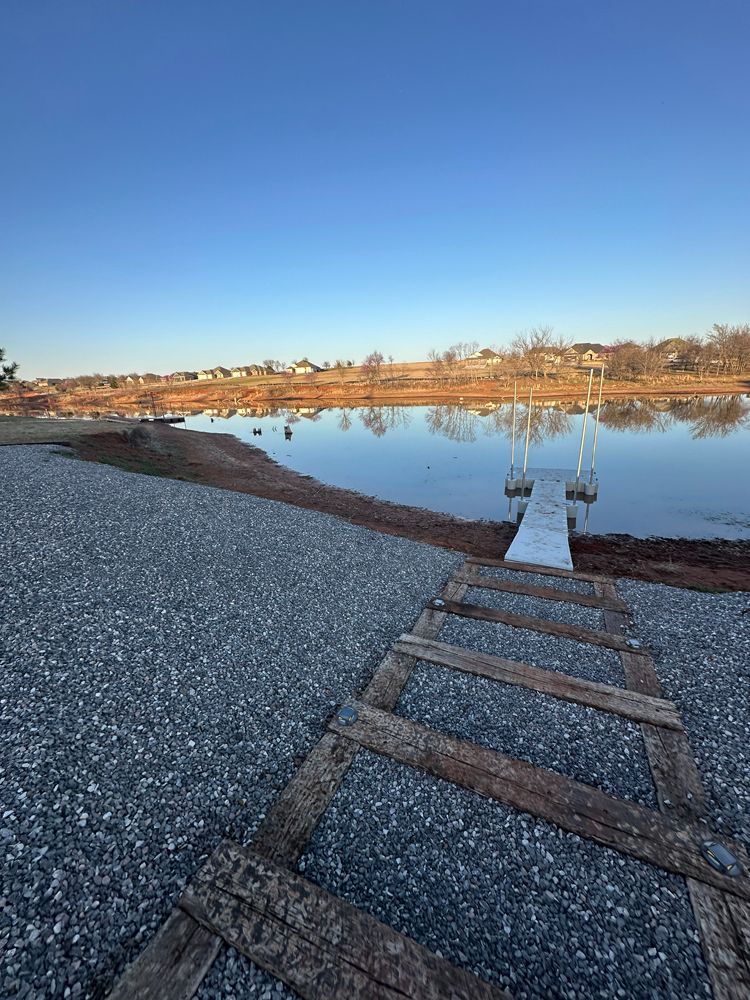
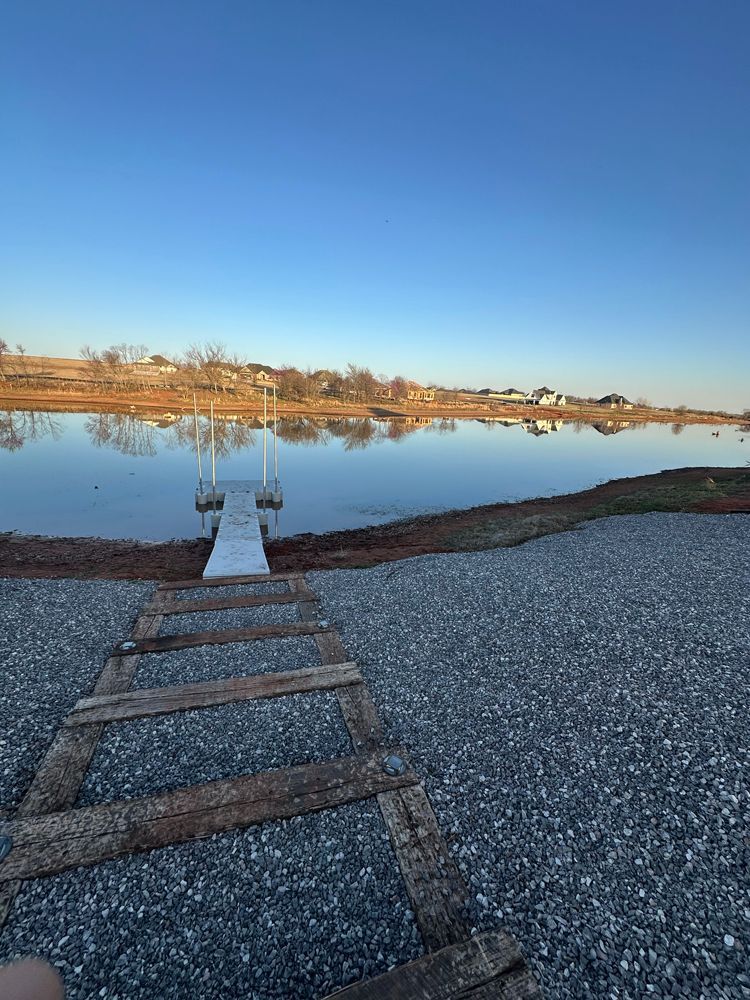
After construction is finished, the pond begins filling from runoff and groundwater, and you'll see water levels stabilize as the compacted clay bottom and dam seal. A well-built pond maintains consistent depth even during dry periods, provides clean water for livestock without muddy access points, and handles overflow from heavy storms without washing out the dam or creating downstream flooding. The embankment develops vegetation cover that stabilizes soil and reduces maintenance, while the pond itself clears as suspended sediment settles and aquatic ecosystems establish.
Pond projects are customized based on available land, watershed size, and how the water will be used. Small livestock ponds may hold one to three acre-feet of water and rely entirely on surface runoff, while larger recreational ponds can exceed ten acre-feet and may include well-fed inflow to supplement rainfall. Soil testing during planning determines whether the site has enough clay content to seal naturally or requires imported clay for the pond bottom and dam core.
Questions Property Owners Ask About Ponds
Rural landowners in the Newcastle area considering pond construction typically want to understand filling timelines, maintenance requirements, and how to size the project appropriately for their land.
What determines how quickly a new pond fills?
Fill time depends on watershed area, soil infiltration rates, and rainfall patterns, with ponds relying on surface runoff from ten to twenty acres of drainage area typically filling within one wet season if construction occurs before spring rains.
How does Oklahoma clay affect pond sealing?
Native clay soils in this region generally seal well when properly compacted, but sandy or rocky soils require importing clay to line the bottom and dam core, adding material costs but ensuring the pond holds water long-term.
When should pond construction happen to take advantage of seasonal rainfall?
Fall construction allows the pond to fill during winter and spring rains, giving it time to seal and establish before the summer evaporation season when new ponds lose water faster than aged ponds with sealed bottoms.
What size pond does a property need for livestock water?
Sizing depends on herd size and alternative water sources, but a general guideline suggests one acre-foot of storage per twenty to thirty cattle, accounting for evaporation, seepage, and drought reserves.
How often do ponds require maintenance after construction?
Routine maintenance involves monitoring spillway function, controlling erosion on dam slopes, and managing vegetation around the water's edge, with most ponds requiring minimal intervention once established unless heavy runoff deposits excessive sediment.
Okie Elite Land Services provides free estimates that include site evaluation, size recommendations based on your property's characteristics, and construction timelines. Call (580) 320-0588 to discuss your pond project and schedule a site visit to assess feasibility and placement options.